Intellilaboratory’s Paleontology Products and Services
Unlocking Deep Time: Intellilaboratory’s Suite of AI-Powered Paleontology Products and Services
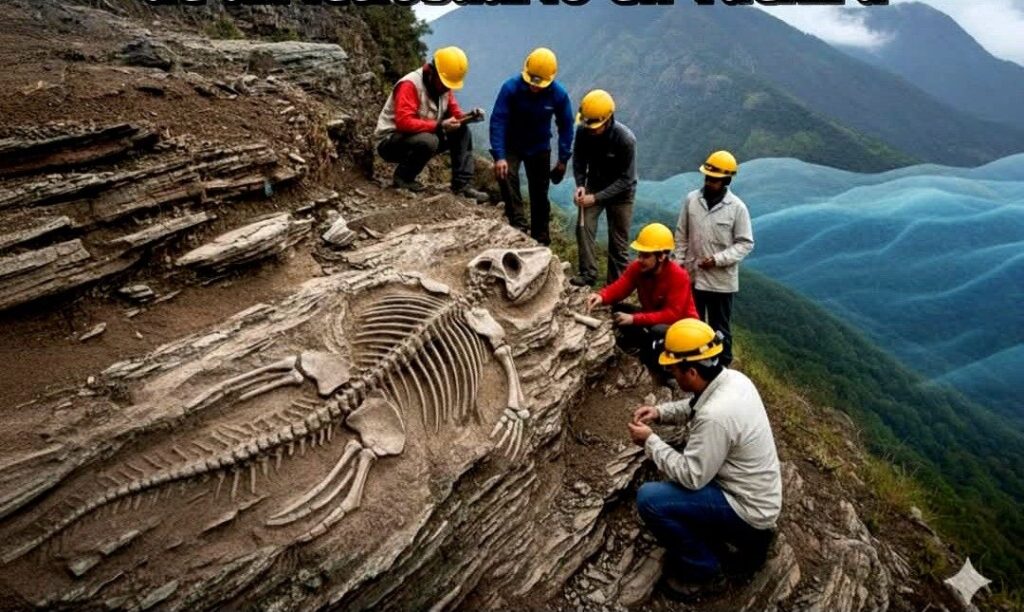
Paleontology, the study of ancient life through fossils, is a field rich with discovery but often constrained by the meticulous nature of traditional methods. Analyzing vast fossil collections, interpreting complex geological data, identifying subtle species differences, and modeling past environments demand immense expertise and time. Enter artificial intelligence (AI). At Intellilaboratory, we leverage cutting-edge AI to augment paleontological research, offering powerful tools designed to accelerate discovery, enhance analysis, and unlock new insights into Earth’s prehistoric past. Our Paleontology division provides a range of innovative products and services specifically tailored to meet the unique challenges and opportunities within this fascinating scientific domain.
Our Core AI Capabilities (Underpinning Paleontology Services):
Our products harness several key AI technologies:
- Machine Learning (ML): Algorithms that learn patterns from data (fossil images, geological surveys, fossil records, scientific literature) to make predictions or classifications.
- Computer Vision (CV): AI systems capable of “seeing” and interpreting visual data, crucial for analyzing fossil images, drawings, and geological maps.
- Natural Language Processing (NLP): Enabling AI to understand and process human language, useful for summarizing scientific texts or extracting information from databases.
- Predictive Modeling: Using historical data and ML to forecast past events, environmental changes, or the potential locations of undiscovered fossils.
Paleontology Products and Services:
Our offerings are designed to be flexible, scalable, and adaptable to various needs, whether for research institutions, museums, or educational purposes.
1. AI-Powered Fossil Analysis Suite:
- Product Description: A comprehensive software platform providing a suite of tools for analyzing fossil data.
- Key Features:
- Automated Image Analysis: Upload images of fossils (e.g., 2D photos, 3D scans, X-rays), and AI algorithms can identify species, detect subtle anatomical features, quantify morphological variations, or even suggest potential taxonomic classifications based on comparison with vast digital databases.
- Stratigraphic and Geological Context Integration: Overlay fossil data with geological layers and maps to aid in paleoenvironmental reconstruction and dating.
- Anomaly Detection: AI can highlight unusual features within fossils or collections that might indicate rare discoveries or potential preparation errors.
- Quantitative Morphometrics: Convert visual characteristics into numerical data for statistical analysis, enabling more rigorous comparison between specimens and populations.
- Target Audience: Professional paleontologists, fossil preparators, graduate students, researchers.
- Benefits: Accelerates the initial analysis phase, reduces human error in basic identification, allows for deeper quantitative analysis, facilitates comparison across large datasets.
2. Predictive Fossil Occurrence and Environment Modeling:
- Product Description: An AI-driven platform that analyzes fossil distribution patterns, geological formations, and paleoenvironmental data to predict where undiscovered fossils might be found or what past environments looked like.
- Key Features:
- Data Integration: Incorporates fossil find locations, geological surveys, climate proxies (derived from fossils or rocks), and historical geological events.
- Modeling: Uses ML to create predictive models of fossil habitats and paleoclimate zones.
- Exploration Guidance: Generates high-probability target areas for field expeditions or suggests specific environmental conditions to search for particular types of fossils or organisms.
- Target Audience: Research paleontologists, exploration geologists, museum curators seeking to expand collections.
- Benefits: Optimizes fieldwork by targeting high-potential sites, aids in understanding past climate change and ecosystems, supports strategic collection building.
3. Intelligent Fossil Database and Knowledge Management:
- Product Description: A smart database platform that curates paleontological data and leverages AI for enhanced search and discovery.
- Key Features:
- Curated Data Integration: Securely integrates data from local collections, museum databases, and global repositories.
- Semantic Search: Goes beyond keyword searches; understands the meaning behind queries (e.g., “find fossils from the Jurassic period in what is now Europe, similar to Mammut“) using NLP.
- Data Visualization: Generates insightful visual summaries, trends, and comparisons from the integrated data.
- Automated Summarization: Provides concise summaries of large collections or research findings.
- Target Audience: Museum curators, university researchers, database managers, educators.
- Benefits: Makes data management more efficient, enables faster research by reducing manual search time, provides powerful tools for data interpretation and presentation, facilitates collaboration by sharing insights.
4. AI-Assisted Species Identification and Classification Tool:
- Product Description: A tool designed to aid paleontologists in identifying and classifying fossil specimens, particularly challenging ones.
- Key Features:
- Image Recognition: Analyzes high-resolution images of fossils to identify characteristic features.
- Comparison Engine: Compares the analyzed features against a vast digital library of known fossil species (including morphometrics and qualitative descriptions).
- Confidence Scoring: Provides a confidence level for proposed identifications or classifications.
- Hypothesis Generation: Suggests potential species based on similarity and quantifies the strength of the match.
- Target Audience: Paleontologists, graduate students, preparators,鉴定人 (鉴定人 typically means appraiser/identifier, but in paleontology, it’s often implied).
- Benefits: Speeds up the identification process for routine specimens and provides crucial starting points for difficult identifications, reduces subjectivity, supports training by providing feedback on classification criteria.
5. Fossil Preparation and Conservation Monitoring (Advanced AI):
- Product Description: (Potential future or specialized service) AI tools aimed at assisting fossil preparation (the process of uncovering fossils from rock matrix) and monitoring conservation.
- Key Features (Conceptual):
- Digital Twin Simulation: Create a virtual model of a fossil block and simulate different preparation techniques to predict outcomes or identify fragile areas digitally before physical work begins.
- Process Monitoring: Use image analysis to track the progress of physical preparation (e.g., documenting layers removed, identifying problematic areas) and potentially flag signs of instability.
- Target Audience: Fossil preparators, curators, conservators.
- Benefits: Minimizes risk during preparation, allows for better planning, aids in long-term conservation strategies.
6. Educational and Outreach Modules:
- Product Description: Interactive AI tools designed to make paleontology more accessible to students, educators, and the public.
- Key Features:
- Interactive Identification Games: Allow users to “identify” fossils using simplified AI algorithms, learning about paleontology in the process.
- Personalized Learning Paths: Use AI to adapt educational content based on user interaction.
- Virtual Museum Tours/Exhibits: Create engaging, AI-enhanced online experiences.
- Target Audience: Teachers, students, museum educators, general public.
- Benefits: Increases engagement and understanding of paleontology, provides accessible tools for learning and outreach.
Intellilaboratory is committed to advancing paleontological research through the intelligent application of AI. Our suite of products and services—from powerful analytical tools to predictive modeling and intelligent databases—aims to empower researchers, institutions, and enthusiasts to tackle complex questions, accelerate discovery, and better understand the incredible story of life on Earth. We continuously refine these tools and explore new applications to further the frontiers of paleontology. To learn more about our specific offerings or discuss potential collaborations, please refer to the website or contact us directly.