This is the predominant and widely accepted model taught in most archaeology textbooks. It posits that the first people to reach the Americas were Asian migrants who crossed the Bering Land Bridge (Beringia) during the last Ice Age. They then moved southward rapidly.
Key Premises
- Source: Asia (specifically Siberia, via the Bering Land Bridge).
- Timing: Arrival around 15,000 to 13,000 calendar years before present (BP), coinciding with the melting of the Laurentide Ice Sheet.
- Technology: The defining characteristic is the Clovis culture, named after the site in New Mexico. Clovis people are known for their distinctive projectile points (lances or dart tips) that are fluted (have a groove down the center for hafting to a shaft).
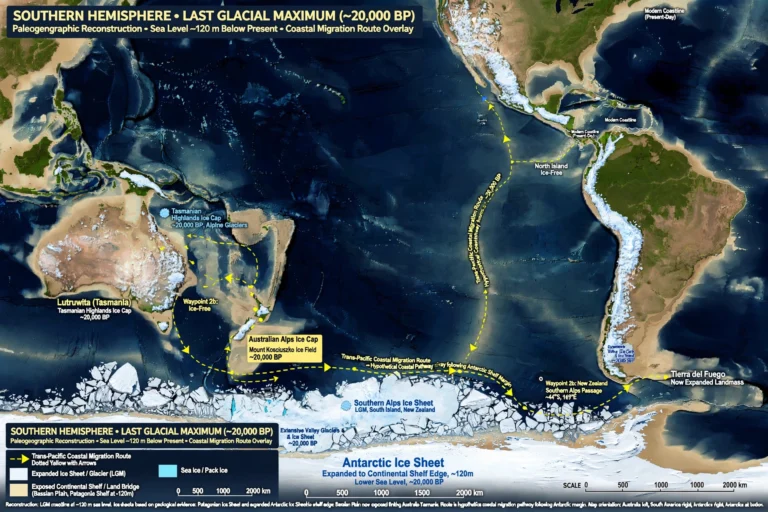
- Route: Likely across the exposed Bering Land Bridge and then southward through an ice-free corridor opening in Western Canada (between the Laurentide and Cordilleran ice sheets) or by coastal routes.
- Replacement: The Solutrean Hypothesis suggests an earlier European influence. The Clovis-First model generally implies that any similarities between Clovis and European technologies are coincidental or due to independent invention, and that the Clovis people represent the primary, founding population of the
Americas.
Weather Patterns
- Beringia (Crossing): During the last Ice Age (approx. 26,000 to 19,000 years ago, peak around 20,000 BP), much of North America was covered by the Laurentide Ice Sheet, which extended south of the Great Lakes. Beringia, the land bridge, was exposed due to lower sea levels (about 400-500 feet lower than today). The climate in Beringia was cold and dry, but potentially less harsh than the areas further south they would eventually enter. The crossing itself would have involved traversing this land bridge, likely through areas of tundra and steppe.
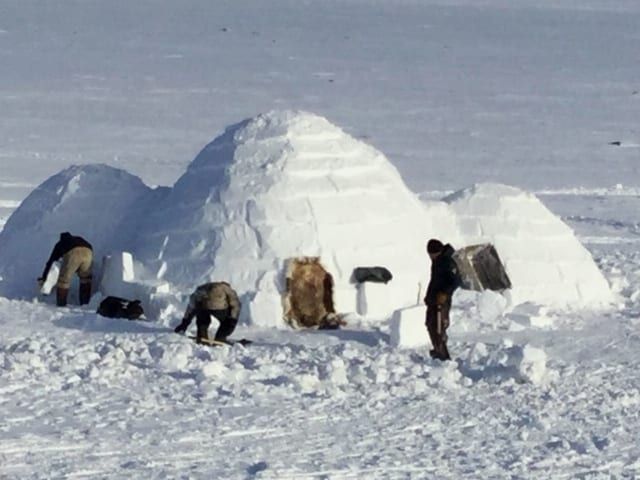
- North America (Post-Arrival): Arrival coincided with the end of the last Ice Age. Massive continental ice sheets were still present but actively melting. This period saw significant climate instability, including periods of rapid warming and cooling, shifts in precipitation, and dramatic changes in vegetation (from tundra to spruce forests). The primary challenge upon entering North America was the cold temperatures and the presence of massive ice sheets that periodically advanced or retreated.
Clothing
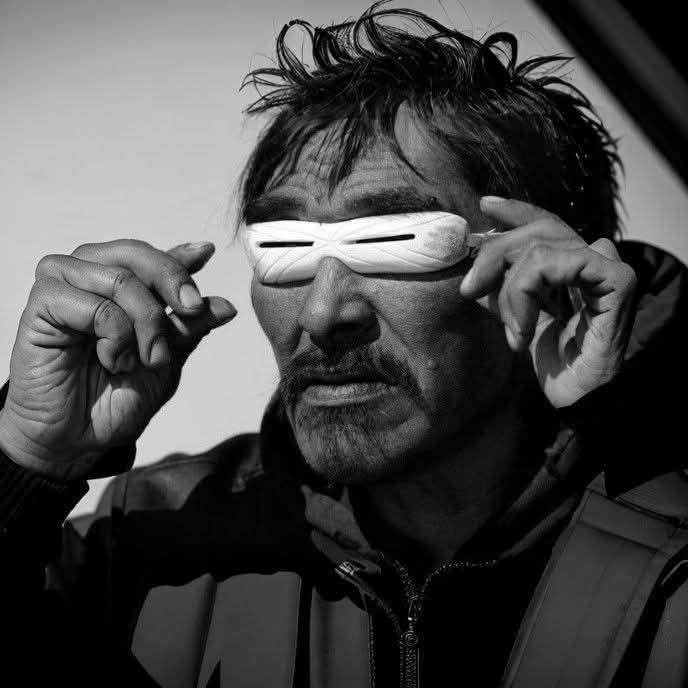
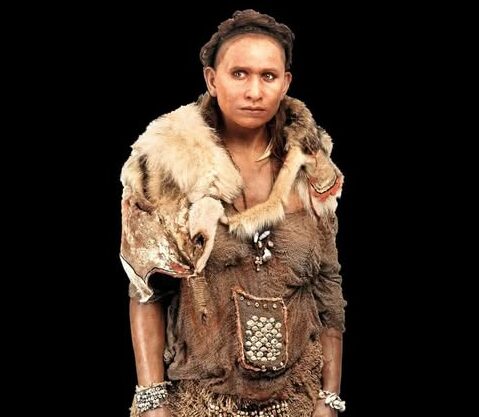
- Materials: Furs and hides were essential. Likely materials included the fur of caribou (reindeer), mammoths, bison, and other native fauna. Hide processing would have involved tools like scrapers, knives, and perhaps the use of fire (hide boiling) for tanning.
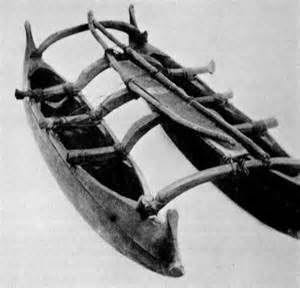
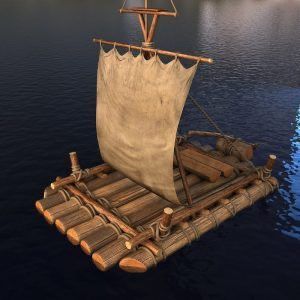
- Construction: Clothing would have been made primarily of sewn garments (semituck or tubular sewn technique) using sinew, hide, or plant fibers for thread. Cloaks, robes, leggings, and perhaps mukluks (soft, fur-lined boots) would have been vital for warmth in the cold climates encountered south of Beringia. Given the potential for coastal routes, waterproof materials like seal or otter skins might have been used in those areas.
Technology
- Core Technology: Highly specialized hunting technology adapted to the megafauna of the time (mammoths, mastodons, giant ground sloths). The Clovis point is the hallmark technology. These spear points are bifacial (flaked on both sides), bifurcated (split near the base), and have a characteristic fluting (a groove running down the center). The fluting technique is complex and requires specific knapping skills, suggesting shared knowledge or origin.
- Other Tools: Besides projectile points, Clovis (and related) toolkits included scrapers, knives, drills, awls, and sometimes distinctive bone tools (like those from the Blackwater Draw site). Hide working tools and woodworking tools are also evidenced.
Evidence
- Archaeology: Numerous archaeological sites across North and South America, particularly in North America, containing characteristic Clovis projectile points. These sites often show evidence of hunting large mammals. The lack of earlier, widespread, similar-looking projectile point styles in the Americas before Clovis is a key piece of evidence supporting the model (though regional variants exist later).
- Climate & Ice Core Data: Ice core records show the climate conditions during the time period, indicating the potential for the routes and timings proposed by the Clovis model (e.g., the opening of corridors).