🌊 Deep Dives: Unearthing the Lapita – Explorers of the Pacific 🗺️ Pottery, People & DNA 📜
Hey Explorers! 👋 Last time we talked about the Out of Africa exodus and the very beginnings of intentional long-distance seafaring. Now, let’s pinpoint the specific culture that arguably took that ambition to the next level: the Lapita Culture! Ready to dive deep? 🏖️
📍 Where it All Began:
While the Out of Africa journey started roughly 70,000 years ago, the story of Lapita unfolds much later, around 50,000 years ago (50kya). Evidence points to the Philippines or the northern coast of mainland Southeast Asia (maybe as far west as southern China) as the likely starting point for this remarkable expansion. 📅 Exact Dates & The Early Voyages:
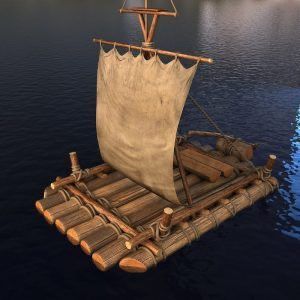
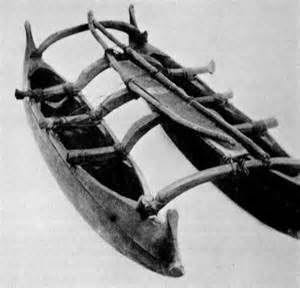
- Initial Seafaring: The very first deliberate long-distance voyages using outrigger-equipped boats (like the early proa) likely began around 50,000 years ago. Archaeological sites like Nanshan (China) show adaptations to coastal and marine resources dating back to about 70,000 years ago, hinting at much earlier coastal living, but the intentional crossing of significant open water to colonize new islands probably started later.
- The Lapita Phase: The distinct “Lapita” cultural phase, named after the site on the northern coast of Papua New Guinea (the Bismarck Peninsula), is dated to around 3,500 BCE to 3,000 BCE (roughly 5,000 years ago). This is when the culture we specifically call Lapita flourished and spread.
🌤️ Climate Shifts & Their Influence: The timing of the Lapita expansion overlapped with significant climate changes:
- Holocene Climatic Optimum (~8,000 to 6,000 BCE): A period of warmer global temperatures and slightly higher sea levels after the last ice age. This might have initially opened coastal routes or altered resource availability.
- Rise of the Pacific (4,200 BCE onwards): Around 4,200 BCE, a major climate event (the 4.2 kiloyear event) caused significant droughts, particularly in the Nile Valley and the Middle East. This led to the collapse of some early farming societies and potentially pushed populations towards coastal areas or spurred further exploration as resources became stressed. So, climate shifts likely played a role in both enabling and perhaps accelerating the Lapita expansion, making the sea a more critical resource or escape route.
🧬 The Genome & Population Bottlenecks:
This brings us to the fascinating genetics! The Lapita expansion is intrinsically linked to the Austronesian language family.
- The “Partner Genome”: As we discussed with Out of Africa, the initial migration already happened. The Lapita people represent a specific expansion wave from this existing pool. Genetic studies suggest that this Lapita expansion was characterized by a significant population bottleneck.
- Founder Effect: Just like with the Out of Africa main migration, the Lapita voyagers were a relatively small group leaving their homeland. This means they carried only a fraction of the genetic diversity available in the source population.
- Male Dominance (Founder Effect): Crucially, genetic studies (looking at Y-chromosome DNA) show a strong male founder effect. This means the initial Lapita voyagers were likely dominated by a small number of males, with fewer females. This is strongly supported by archaeological graveyards, which contain many male burials with distinctive grave goods, and relatively few female burials.
- Genetic Bottleneck: The small founding population size resulted in a severe genetic bottleneck for the Lapita migrants themselves. This lack of genetic diversity is reflected in the archaeological record (similar pottery styles across vast distances) and is later confirmed by DNA analysis.
- Mixing Down Under: As these Lapita-descended people spread through the Pacific, they encountered local populations. Genetic evidence shows admixture occurred, particularly in the Vanuatu archipelago, where gene flow significantly diluted the founder effect and shaped the genomes of modern Polynesians (including Māori and Hawaiians). The specific genes carried by the initial Lapita voyagers (and their descendants) became dominant in Polynesia, explaining the spread of Austronesian languages, navigation skills, and specific material culture (like advanced double-canoe technology).
🔬 In Summary:
The Lapita culture was a revolutionary maritime adaptation, emerging from the earlier Out of Africa migrations. Around 50,000 years ago, small groups, likely dominated by males, undertook incredible voyages from Southeast Asia in outrigger-equipped boats. Flourishing around 3,500 BCE, they rapidly colonized the remote shores of New Zealand and the Austronesian heartland (Philippines/Malaysia). Their story was shaped by climate shifts that may have spurred exploration, a severe genetic bottleneck due to small founding populations, and a distinct male founder effect evident in their burial practices and Y-chromosome DNA. Crucially, they mixed with local populations during their expansion, creating the unique Polynesian cultures we see today. The Lapita legacy is etched in pottery, language, and genes, proving that small, determined groups on the seas could reshape the world. What questions does this leave you with? Share your thoughts below!