An Analysis and Summary of Paleontology
The Whispering Rocks
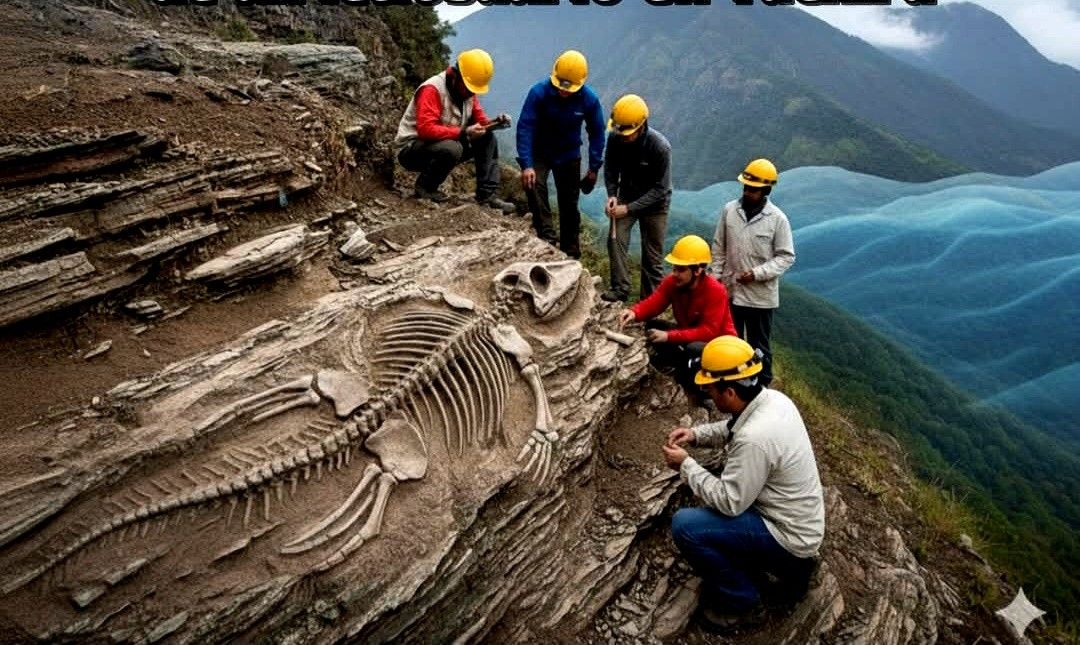
Imagine standing on a windswept shore, peering into the ancient layers of rock, or deep within a fossil-rich quarry, carefully brushing away millennia of dust. You’re not just looking at stone; you’re peering into the distant past, deciphering the story of life on Earth. This is the captivating world of paleontology.
At its heart, paleontology is the scientific study of life that existed in the past. It’s the detective work of reconstructing ancient organisms – from the colossal dinosaurs that dominated continents to the intricate forms of early life in the oceans and the microscopic fossils that reveal billions of years of evolutionary history. It’s a field that bridges vast stretches of time, using tangible clues (fossils) to piece together a narrative of Earth’s biological journey.
This post will delve into the core aspects of paleontology, exploring its methodologies, key discoveries, and its enduring relevance. We’ll see how this discipline isn’t just about dusty fossils in museums, but a dynamic, evidence-based science that continues to evolve, informing our understanding of evolution, ecology, and even our own place in the grand scheme of life.
Fossils as Time Capsules
The primary evidence for paleontology lies in fossils. These are the preserved remains or traces of ancient organisms. Fossils form under specific conditions, typically requiring rapid burial (by sediment, volcanic ash, ice, or tar pits) to protect the remains from decay and scavengers. Over immense periods, geological processes can replace organic material with minerals (like petrified wood) or leave detailed impressions in rock (like the famous fossil beds in Lyme Regis). Sometimes, only traces are preserved, such as footprints, burrows, or fossilized dung (coprolites).
Finding fossils is only the first step. Paleontology is fundamentally an interpretive science. It requires rigorous analysis to understand what the fossil is, how it lived, and what it tells us about the past environment and the evolution of life.
Methodologies and Tools: More Than Just a Pickaxe
Paleontology is a highly interdisciplinary field, drawing upon geology, biology, chemistry, physics, and even mathematics. Key methods include:
- Stratigraphy: Studying rock layers (strata) and their sequence, age, and composition. Fossils found in different layers can provide relative dating (older fossils in deeper layers).
- Paleoecology: Reconstructing past ecosystems, including the interactions between organisms and their environment. This involves studying fossils in situ and analyzing associated evidence like fossilized soils, pollen, and ancient climates.
- Taxonomy: Identifying and classifying fossils into groups based on shared characteristics. This involves comparing new finds with existing knowledge and often requires detailed study of minute structures.
- Comparative Anatomy: Comparing fossil structures (like bones or shells) with those of living organisms to infer relationships, functions, and evolutionary pathways (homologies).
- Geochronology: Determining the absolute age of rocks and fossils using methods like radiometric dating (measuring the decay of radioactive isotopes), magnetostratigraphy, and biostratigraphy.
- Paleoenvironmental Reconstruction: Using fossil evidence (e.g., types of fossils, their distribution, associated sediments) to infer the climate, geography, and ecosystems of the past.
- Molecular Paleontology: Analyzing exceptionally preserved organic material (like proteins or DNA fragments) from fossils, particularly in cases like frozen mammoths or permafrost deposits, to gain insights into evolution and biology.
- Digital Paleontology: Utilizing technologies like CT scans, 3D modeling, GIS mapping, and virtual reality to study fossils non-destructively, visualize reconstructions, and analyze data more effectively.
Major Themes and Discoveries: Life’s Incredible Journey
Paleontology has revealed a story of profound change and continuity:
- The Dawn of Life: Fossils like stromatolites and early microfossils (e.g., from the Ediacaran biota) show how life arose and diversified in the oceans billions of years ago.
- The Explosion of Life: The Cambrian Explosion showcases the rapid diversification of complex animal life forms around 540 million years ago.
- Dominance of Reptiles: Paleontology details the rise and reign of dinosaurs, their anatomy, behaviors, and eventual decline, paving the way for mammals.
- Mammal Evolution: Fossil records trace the evolution of mammals from small, shrew-like ancestors into diverse forms, including the ancestors of primates and, eventually, humans.
- Evolution: Perhaps the most crucial theme. Paleontology provides direct evidence for evolution through transitional forms (e.g., Archaeopteryx linking dinosaurs and birds), fossil records showing gradual change over time, and biogeography revealing how life spread across the globe.
- Mass Extinctions: Fossil evidence reveals catastrophic events (like the K-Pg extinction that killed the dinosaurs 66 million years ago) and how life recovered and re-diversified, offering crucial insights into Earth’s history and potentially informing our understanding of current biodiversity crises.
- Ancient Environments: From tropical swamps to frozen tundras, from shallow seas to volcanic plains, fossils reconstruct environments that existed long before humans, helping us understand Earth’s changing climate and geography.
More Than Just Dinosaurs: A Broader View
While dinosaurs capture the public imagination, paleontology encompasses much more:
- Marine Life: The vast majority of fossils come from the oceans. Paleontology studies ancient fish, mollusks, crustaceans, echinoderms, and microscopic plankton, revealing the history of marine ecosystems.
- Insects and Arthropods: Fossilized insects, preserved in amber or lake sediments, provide insights into the evolution of terrestrial life.
- Plant Fossils: Fossil plants (leaves, stems, wood) are crucial for understanding ancient vegetation, climate, and plant evolution.
- Microfossils: Tiny organisms like foraminifera, diatoms, and pollen grains are incredibly important for biostratigraphy and reconstructing past environments and climates.
- Trace Fossils: Impressions, tracks, burrows, and feeding marks provide direct evidence of animal behavior and paleoecology.
The Relevance Today
Paleontology isn’t just about the past; it’s deeply relevant to the present and future:
- Understanding Evolution: Provides the empirical basis for evolutionary theory, helping us understand biodiversity, adaptation, and the mechanisms driving change.
- Climate Change Research: Fossil records offer long-term perspectives on climate change, helping scientists model past climate dynamics and predict future scenarios.
- Resource Exploration: Paleontology informs the search for fossil fuels (oil, gas, coal) and mineral deposits (like phosphate for fertilizer) by studying sedimentary environments and ancient organic matter.
- Biodiversity Conservation: Insights into past extinctions and ecosystem dynamics highlight the fragility of life and inform conservation efforts today.
- Developing Scientific Skills: The field trains critical thinking, analytical skills, and techniques applicable across various scientific disciplines.
Unearthing Knowledge, Illuminating the Future
Paleontology is a vibrant and essential scientific discipline. It is the science of the deep past, the detective of life’s history, and the key to unlocking fundamental truths about our planet and the evolution of all living things. By meticulously studying fossils and the context in which they were found, paleontologists continue to unravel the intricate tapestry of life on Earth, providing invaluable insights that resonate far beyond the quarries and laboratories where discoveries are made.