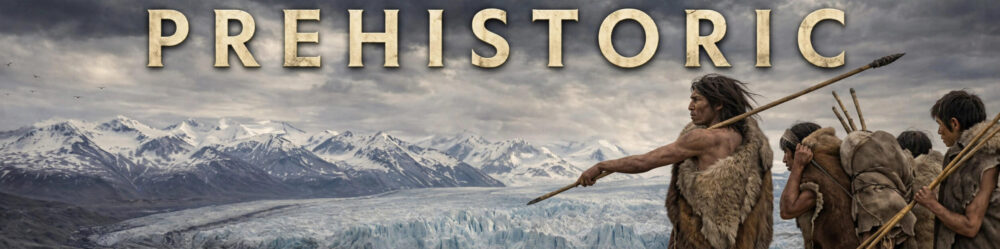
Hey Prehistory Fans!
Ever wonder what the global thermostat was doing while our early ancestors were evolving? 🤔 Dive into the Mid-Piacenzian Warm Period (MPWP), the peak of the Pliocene epoch, roughly 3.0 to 2.7 million years ago! This wasn’t just a bit warmer than today – it was a full-on, planet-wide greenhouse event! 🌍🌡️
🌍 Glacial Goodbye (Almost!)
Unlike the world we know, the MPWP saw atmospheric CO2 levels significantly higher than pre-industrial times (estimates often >400-550 ppm!). Crucially, the major ice sheets of Antarctica and Greenland were dramatically reduced or possibly absent. Sea ice around Antarctica was likely much lower too.
🌊 Underwater World & Rising Tides
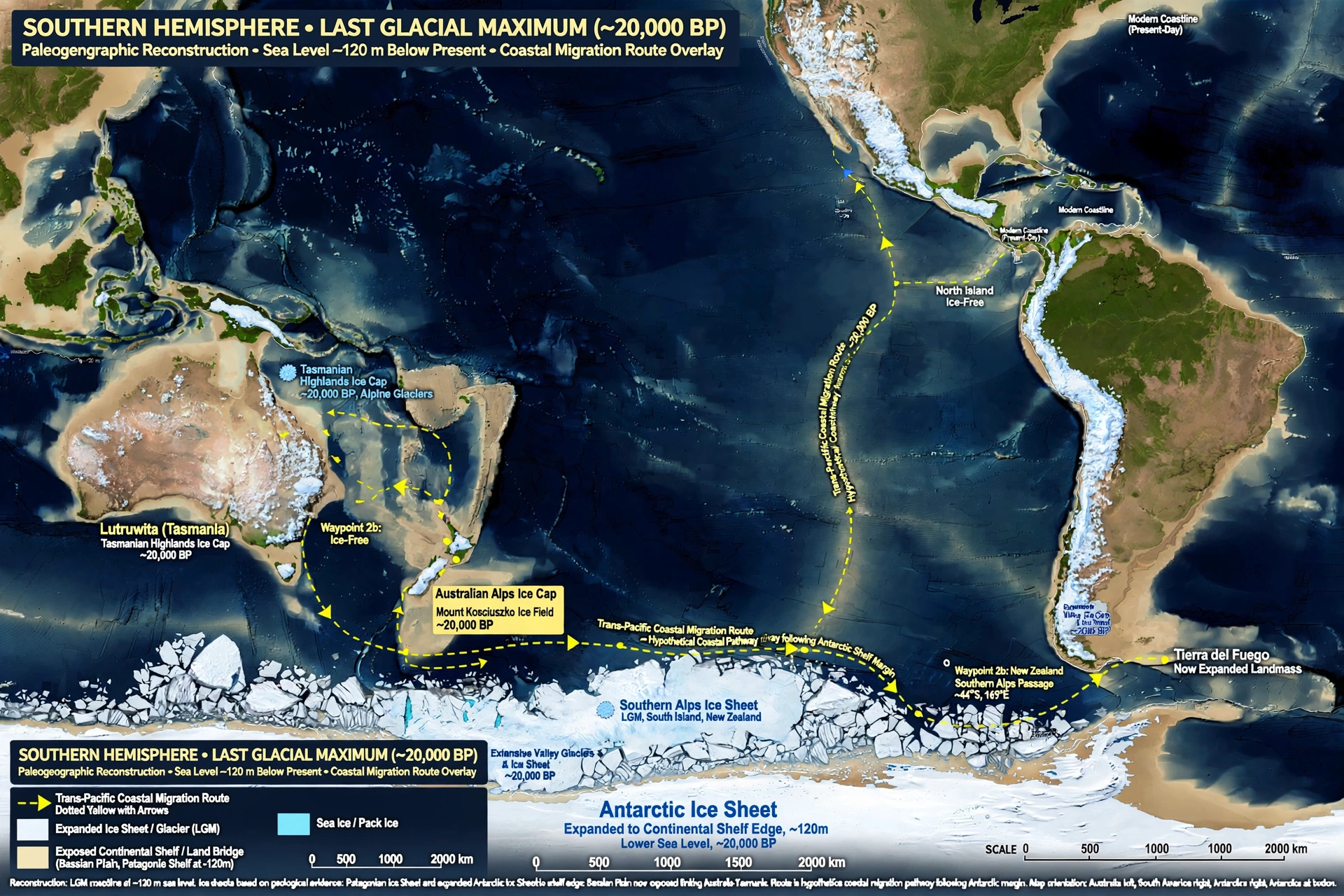
This intense warming led to massive sea level rise! Global mean sea level was estimated to be at least 60-80 meters (about 200-260 feet) and possibly up to 120 meters (about 400 feet) higher than today. Entire continental shelves were submerged, connecting previously separated landmasses and creating vast new coastlines. Imagine tropical forests sprawling onto what are now coastal plains!
🗺️ Earth’s Geography (Way Different!)
With ice sheets gone from Antarctica, global climate zones shifted dramatically poleward. The tropics extended further south, and subtropical deserts shrank or disappeared. The world was generally wetter, with extensive rainforests covering areas now temperate or arid. Mountain building continued (like the Himalayas), but the climate was warmer overall.
🌡️ Temperatures: Sweating It Out!
Global mean temperatures were significantly higher than pre-industrial levels, likely by 2-5°C or more. High-latitude regions might have seen increases of up to 10°C. It was truly a world without polar ice caps for much of the time, leading to warmer oceans and air across the globe.
🌿 Life in the Hothouse:
The warm, wet climate fostered lush vegetation. Forests, including tropical and subtropical types, dominated many landscapes that are now grasslands or deserts. Savannas and grasslands certainly existed, especially in regions like East Africa, but the overall picture was greener than the classic ‘savanna’ image often associated with later hominin evolution.
🧍♂️ Lifestyle of Early Hominins (Like Australopithecus!)
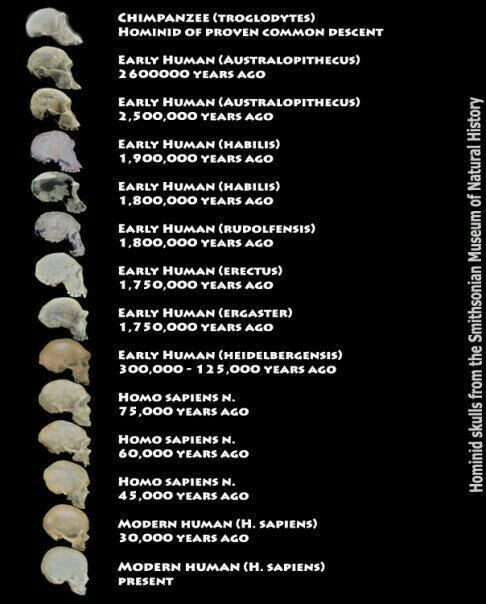
Our early hominin ancestors, like Australopithecus afarensis (Lucy, ~3.2 Ma) and potentially even earlier members of the genus like Sahelanthropus or Orrorin (~3.0-2.5 Ma), roamed this warmer world. Their environments were likely a mosaic of forests, woodlands, and wetlands, not necessarily the dry savannas we picture today. They were evolving key adaptations, most notably bipedalism, which offered advantages in navigating varied terrain and possibly improved thermoregulation. Their diets probably included fruits, leaves, nuts, and hard-shelled seeds.
🦜 Adaptations: Hair or No Hair?
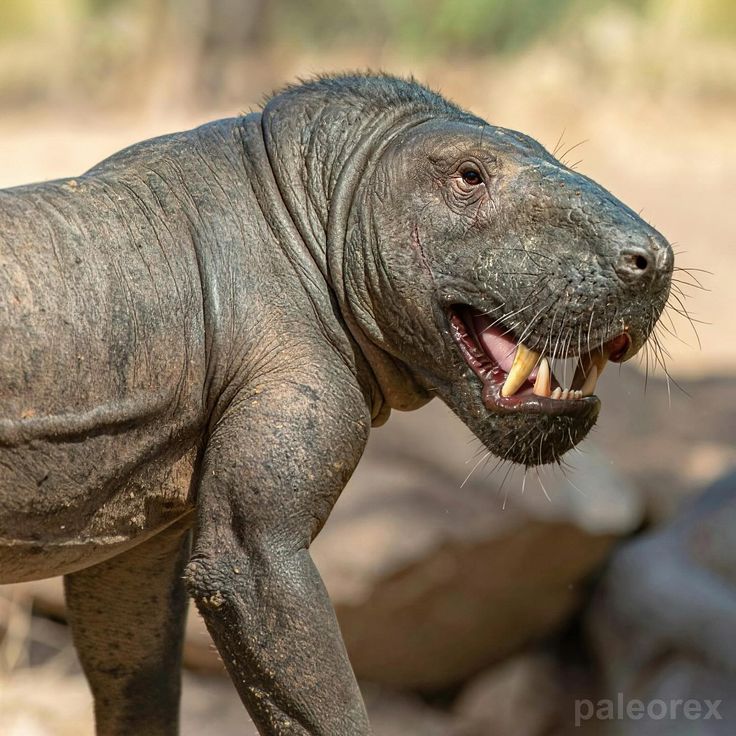
Here’s a hot topic debate! The MPWP was so warm that one theory suggests intense sweating was crucial for large-brained animals (like our ancestors) to cool down efficiently. This might have driven the evolution of reduced body hair (“hair loss”) compared to our close ape relatives, leading to the “naked” skin we see today. However, this is highly speculative (the “Aquatic Ape Theory” is one hypothesis, even if related to cooling). We know other apes (like chimps and gorillas) living today have dense fur. So, what about early hominins? They likely had a mix, perhaps less dense hair than apes, but not completely bare. For other mammals, the trend was likely similar: less insulation for better cooling in a warmer world. Think early elephants, whales, and seals adapting their coats.
🔬 Significant Fossil Evidence (Paleontology):
- Hominin: Key sites like Hadar, Ethiopia (Lucy), and sites in Chad and Kenya provide crucial fossils for Australopithecus and potential earlier hominin ancestors. Fossils like Sahelanthropus tchadensis and Orrorin tugenensis are vital for pushing back our origins timeline during this period.
- Climate/Sea Level: Deep-sea cores containing fossils of microscopic marine organisms (like planktonic foraminifera) are crucial. Their oxygen isotope ratios reveal past sea ice extent, and fossil shells provide direct evidence of sea level height. Coralgal reefs also show uplifted marine surfaces indicating highstands.
- Marine Life: Warmer oceans supported vast coral reefs extending further poleward. Tropical and subtropical marine species ranged further north and south.
- Terrestrial Life: Fossils of diverse flora (pollen, spores) and fauna (mammoths are later, but early elephants like Elephas were present) show ecosystems adapted to this warmer, wetter world.
The Mid-Piacenzian Warm Period (c. 3.5 – 3.0 Million Years Ago) – A World Transformed
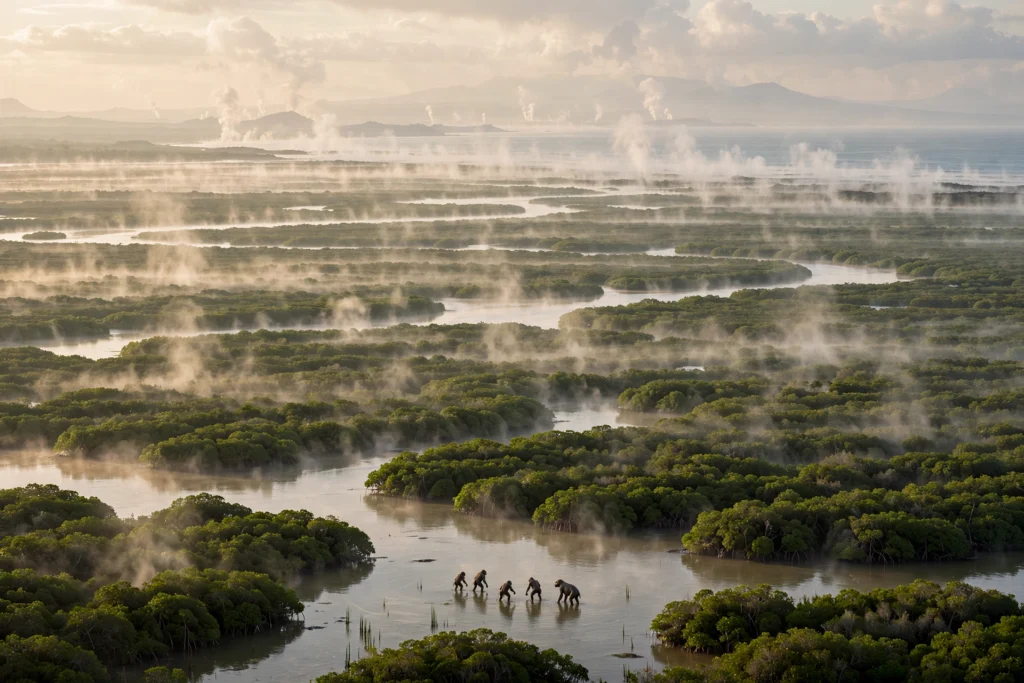
The Mid-Piacenzian Warm Period represents one of the most significant climatic events of the past 50 million years. Occurring roughly between 3.5 and 3.0 million years ago, it was a phase within the Piacenzian Age of the Miocene epoch. This period is characterized by exceptionally high global temperatures, marking a peak in warmth during the Neogene period. It represents a critical interval for understanding climate dynamics, the evolution of ecosystems, and the geographical configuration of the Earth, with profound implications for the early evolution of hominins and the biota of the time.
The Climate Context: A Warmer World
- Global Temperature Anomaly: The Mid-Piacenzian is defined by a significant global mean surface temperature increase compared to the present day. Estimates suggest global mean temperatures were likely 2-4°C (4-7°F) higher than today, possibly even higher in some models. This warmth was part of a broader “Mid-Ocean Thermal Maximum” phenomenon, where ocean temperatures, particularly in the subtropics and tropics, reached levels not seen again until the early Cenozoic.
- Atmospheric Composition: While carbon dioxide (CO₂) levels were considerably lower than pre-industrial times (around 350-400 ppm, possibly around 350-450 ppm according to some ice core proxies and model reconstructions), the climate system was significantly warmer. This suggests that other factors, including higher levels of other greenhouse gases (like methane) or different ocean circulation patterns, played a crucial role. The higher temperatures were likely sufficient to melt significant portions of the Greenland Ice Sheet and possibly parts of Antarctica, leading to substantial global ice volume reduction.
- Polar Amplification: As is characteristic of climate change, warming in the polar regions was more pronounced than at lower latitudes. The Arctic was significantly warmer, potentially ice-free or covered only by seasonal sea ice, while Antarctica likely had much-reduced ice extent compared to now.
- Interhemispheric Symmetry: Unlike some later warming periods (like the Eocene-Oligocene transition), Mid-Piacenzian warmth appears to have been relatively symmetric between the Northern and Southern Hemispheres, suggesting similar forcing mechanisms and climate responses across the globe, although regional variations still existed.
Rising Sea Levels and Altered Geography
- Global Eustatic Sea Level Rise: The most dramatic consequence of the warmer climate and reduced ice volumes was a significant global rise in sea level. Estimates indicate sea levels were approximately 20-40 meters (66-131 feet) higher than present levels. This submerged significant coastal landmasses and connected many previously separated basins.
- Geographical Impacts:
- North America: Much of the interior, including areas like the Dakotas and perhaps even parts of Wyoming, was likely submerged or connected to the
Arctic or Atlantic Oceans. - Europe: Northern Europe, including the UK and perhaps even parts of Scandinavia, was likely closer to being inundated. The Bering Strait was likely narrower or partially submerged, potentially allowing greater faunal exchange with Asia.
- Asia: Sea level rise affected coastal regions across Asia, potentially submerging parts of the Siberian shelf.
- Africa: Coastlines were extended, and the climate gradient from the Sahara (which was already becoming more established) towards the south was buffered or altered by increased moisture transport from the warmer oceans.
- Tropical Oceans: Mid-ocean carbonate platforms like the Mid-Atlantic Ridge likely experienced widespread dissolution (whitecap) due to warmer, more acidic surface waters, further altering ocean chemistry and ecosystems.
- North America: Much of the interior, including areas like the Dakotas and perhaps even parts of Wyoming, was likely submerged or connected to the
- Ocean Circulation: Warmer temperatures and potentially higher atmospheric CO₂ could have led to stronger or differently configured thermohaline circulation (ocean conveyor belt), although the reduced polar ice likely weakened the density-driven sinking in the North Atlantic somewhat.
Life Style of Early Hominins
- Timing: The Mid-Piacenzian Warm Period overlaps with the crucial time of early hominin evolution. Species like Orrorin tugenensis (dated around 3 million years ago) and Australopithecus afarensis (e.g., the famous “Lucy” from 3.2 mya) lived during this interval or just before its peak.
- Environment: Contrary to the later Pliocene and Pleistocene, and the increasingly arid world of the Pleistocene, the Mid-Piacenzian world was warmer and potentially greener globally. However, regional climates varied.
- East Africa (Hominin Cradle): While global warmth was high, East Africa was simultaneously part of a major global aridification trend (the formation and expansion of the Sahara). However, during the Mid-Piacenzian, this aridification might have been temporarily interrupted or offset by the global warmth. Habitats in East Africa likely featured extensive forests, woodlands, and savannas, providing mosaic environments.
- Hominin Adaptations: Early hominins like Australopithecus were likely adapted to these forest-grassland mosaics. Evidence points to bipedalism being an adaptation present by around 4-3 million years ago. Their diet likely consisted of fruits, leaves, nuts, and roots, supplemented by insects and small vertebrates. While Australopithecus fossils show robust skeletons and teeth adapted for processing tough vegetation (similar to some apes), their reliance on
forest resources suggests they moved between patches. They were not specialized savanna grazers like later Paranthropus or Australopithecus robustus forms.
- Implication: The Mid-Piacenzian climate, with its warmer temperatures and potentially more humid conditions in refugia, might have fostered the types of environments where early hominins evolved bipedalism – environments that offered more diverse food sources and perhaps edge habitats between forest and open areas, rather than the intensifying savannas of the later Pliocene/Pleistocene.
Hair Loss and Skin Adaptations in Mammals (Animals, Mammals, and Hominins)
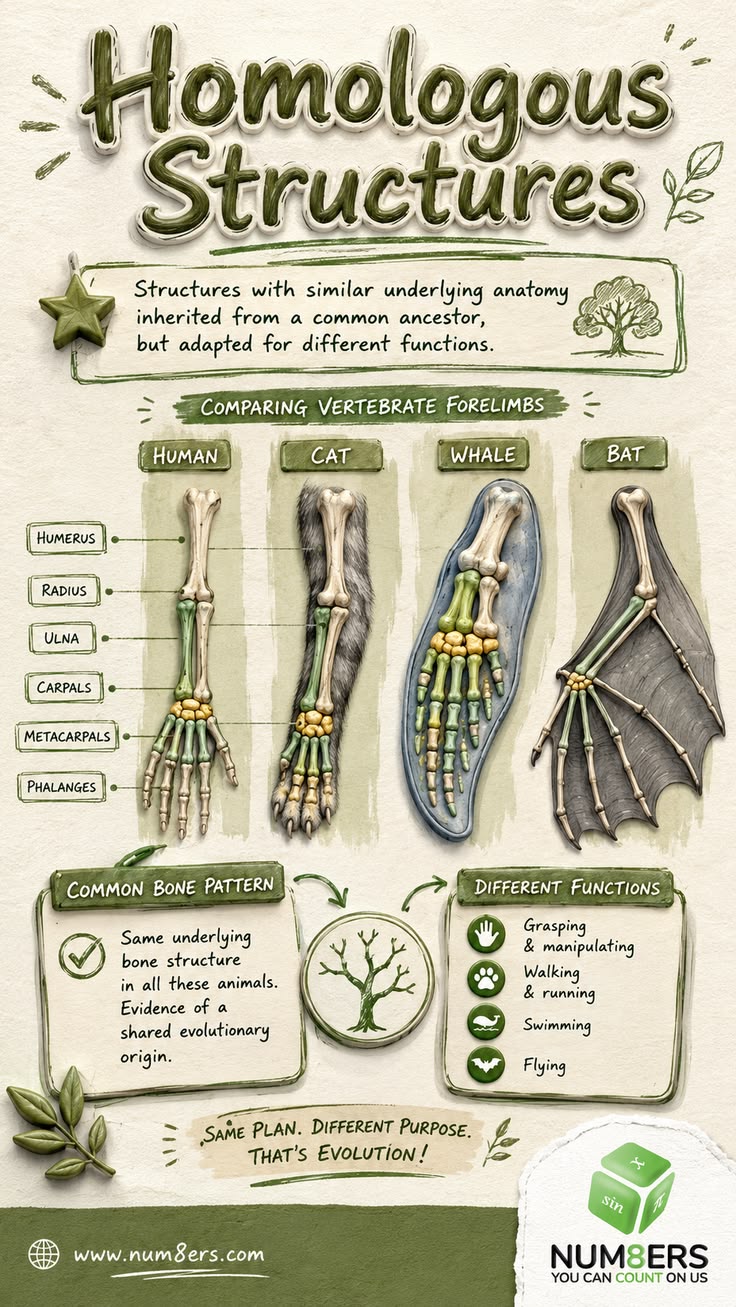
- The “No Hair” Hypothesis: While definitive direct evidence is lacking (fossilization doesn’t preserve hair well), the general consensus and inference from biogeography, paleontology, and evolutionary biology suggest that many mammals, including likely early hominins, experienced significant hair loss or evolved shorter fur during the Miocene/Pliocene, including the Mid-Piacenzian.
- Allen’s Rule & Bergmann’s Corpuscle: This is often explained by evolutionary principles like Allen’s Rule (surface area-to-volume ratio dictates heat loss, favouring shorter limbs in colder climates) and the Bergmann’s Corpuscle (evolutionary pressure for increased heat dissipation in warmer climates). In warmer global climates, animals benefit from reduced insulation (less fur) to dissipate excess heat.
- Hominin Specifics: For early hominins, hair loss likely conferred a significant thermoregulatory advantage in the warmer global climate. Sweating, enabled by reduced insulation, becomes far more effective for cooling in warmer conditions. Retaining thick fur would trap heat, making it harder to cool down. This adaptation likely occurred earlier than previously thought, coinciding with the general mammalian trend towards reduced hair and increased sweating in response to global warmth.
- Skin Type: While hair loss is a major factor, skin adaptations likely co-evolved. This includes increased sweating capacity (as mentioned), potentially denser populations of sweat glands. The evolution of darker skin pigmentation in hominins was likely driven by the increasing intensity of African savanna sunlight and the need to prevent folate degradation (not directly related to the Mid-Piacenzian warmth itself, but amplified by the overall climate change and tectonic uplift altering light conditions). However, in the greener, potentially cloudier world of the Mid-Piacenzian tropics, selective pressure for dark skin might have been less intense than later, when savannas expanded and sunlight intensity increased. For many other mammals, skin coloration would have been primarily for camouflage within the warmer, potentially more humid, and diverse habitats of the time.
A World of Implications
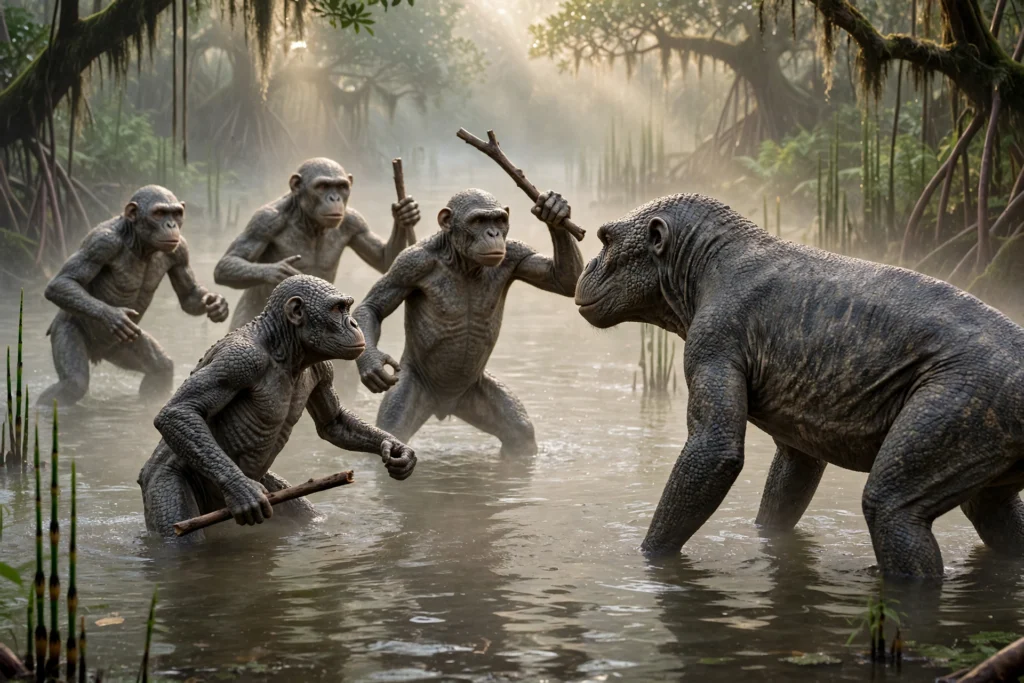
The Mid-Piacenzian Warm Period was a time of profound global warmth, dramatically altered coastlines, and significant shifts in ecosystems. Sea levels were dramatically higher, exposing new landscapes and connecting continents in ways unseen today. The climate supported lush, forested environments globally, although arid trends were still powerful in some regions like East Africa. This was the world stage upon which early hominins evolved crucial adaptations like bipedalism, navigating the mosaic habitats of the time.
The widespread reduction in mammalian fur, including likely early hominins, underscores a major evolutionary shift towards thermoregulation suited for warmer global conditions, favouring sweating over insulation. Understanding this warm period is crucial not only for reconstructing past climates and ecosystems but also for deciphering the environmental pressures that shaped key aspects of mammalian evolution, including our own lineage, and provides valuable insights into the potential sensitivity of the Earth system to climate change, even when driven by different factors than our current anthropogenic warming.
Overview of the Mid-Piacenzian Warm Period Climate
- Global Warming: Atmospheric CO2 levels were significantly higher than today (estimates around 400-450 ppm), driving global temperatures higher. Mean global temperatures were likely several degrees Celsius warmer than the pre-industrial Holocene.
- Antarctic Ice Sheet: The Antarctic ice sheet was likely much smaller than today, perhaps comparable to the size it had during the Pliocene’s peak warmth. This led to lower global sea levels (though still significantly above Holocene levels).
- Sea Levels: Global mean sea level was likely 10-20 meters higher than today, leading to extensive flooding of coastal plains and lowland areas.
- Temperate/Mediterranean Climates: While the onset of Northern Hemisphere glaciation hadn’t fully kicked in (in places like North America, the ice sheet was still building or absent), much of the world, especially lower latitudes and coastal regions, experienced climates that were distinctly warmer and wetter
than today, with temperate to subtropical characteristics extending further north/south. - (Note: The MPWP is generally considered slightly cooler and drier than the peak warmth of the early Piacenzian, but still significantly warmer and wetter than the late Piacenzian/Pleistocene).
Life Thriving During the Mid-Piacenzian Warm Period
The warmer, wetter climate supported lush, diverse, and often more tropical or subtropical ecosystems, particularly in lowland areas and near coasts.
Flora
- Dominant Plants:
- Tropical/Subtropical Forests: Dense, closed-canopy forests dominated by tall trees like palms, figs, laurels, magnolias, and diverse broadleaf
evergreens. Evidence includes fossil pollen and wood fragments. - Woodland Savannas & Grasslands: Transition zones with scattered trees and large expanses of grasses, sedges, and herbs. This was likely more
widespread and diverse than today’s savannas. Key grasses included ancestors of modern tropical grasses. - Riverine and Swamp Forests: Extensive floodplains and wetlands along major rivers (like the ancestral Amazon, Congo, Niger, and large rivers in
North America and Asia) supported lush riparian vegetation. - Coastal Vegetation: Mangroves, salt marshes, and tropical scrub along flooded coastlines.
- Tropical/Subtropical Forests: Dense, closed-canopy forests dominated by tall trees like palms, figs, laurels, magnolias, and diverse broadleaf
- Specific Examples (Evidence-Based):
- Magnolia-like trees.
- Ficus (fig) trees.
- Pistacia (laurustin-like shrubs).
- Podocarpus (southern beech, though temperate, also found in tropics).
- Ginkgo-like trees.
- Hippopalales (a group of tropical/subtropical flowering plants).
- Lycopodium (clubmosses), though less dominant than ferns now.
- Selaginella (spike mosses).
- Salvinia (water ferns) in wetlands.
- Equisetum (horsetails) in damp areas.
- Poaceae (grasses), including early tropical genera.
Fauna (General & Specific Examples)
- Megaherbivores: Large plant-eaters were diverse and abundant.
- Giraffids (e.g., Sivatherium – giant, possibly hornless giraffes; Giraffa itself might have been present in Africa).
- Hipparion horses (smaller, more diverse than modern horses).
- Tapirus (primitive貘-like animals).
- Coryphanter (giant ground sloths).
- Megatherium (giant ground sloths, likely extinct by MPWP).
- Macrauchenia and Toxodonta (tuskless elephant relatives).
- Sloaniidae (giant ground sloths).
- Titanis (giant flightless birds, like prehistoric rheas or emus).
- Dromornithidae (giant moa-like birds, likely flightless).
- Elephantids (early elephants like Elephas and Palaeoloxodon).
- Glyptodonts (armored, sloth-like herbivores).
- Hippopotamidae (primitive hippos, possibly more diverse).
- Tragulidae (dugongs, but likely marine/semi-aquatic).
- Hyaenodontidae (bear-sized, dog-like carnivores).
- Carnivores: A rich array of predators and scavengers.
- Crocuta (saber-toothed cats, widespread).
- Nimravidae (false saber-tooths).
- Machairodontidae (saber-toothed cats, perhaps less diverse).
- Dasyuromorphs (marsupial carnivores like thylacines, wombats).
- Canidae (true dogs, diverse).
- Felidae (true cats, diverse).
- Hyaenidae (hyenas).
- Carnivora (earliest true bears, seals).
- Physeter (sperm whales, though oceanic).
- Large reptiles (monitor lizards, crocodilians).
- Small Mammals: Rodents, lagomorphs (rabbits), primates, insectivores, bats, early whales (baleen whales likely present).
- Marine Life: Warmer oceans teemed with life, lower sea levels allowed for coastal access, but overall marine ecosystems were highly productive.
- Large baleen whales.
- Toothed whales (dolphins, porpoises, sperm whales, beaked whales).
- Sea turtles.
- Marine reptiles (sea snakes, mosasaurs, sirenians – manatees/dugongs).
- Abundant plankton and fish.
Birds
Creating a definitive “list” of all thriving bird species is impossible from the fossil record, as bird fossils (especially complete skeletons) are rare. However, we can infer a diverse avifauna based on paleoclimate, paleontology, and modern analogues.
Fossil Evidence & Predictions
- Large Flightless Birds (Ratites): The ancestors of ostriches, emus, rheas, and kiwis were likely present and potentially even larger or more diverse than today. Examples include Dromornithidae (giant moa-like birds) in Australia and Gondwana, and giant Struthio or Casuari relatives in other continents.
- Terrible Ostriches (Titanis): Giant flightless birds found in North America, likely omnivorous or scavenging.
- Waterfowl: Ducks, geese, loons, grebes, screamers were likely present and diverse, thriving in warmer lakes, rivers, and coastal wetlands.
- Tinamous & Rheas: South American relatives of chickens and rheas, adapted to open habitats.
- Anhimas & Anates: The steamer duck and the screamers, unique to the Americas, likely present.
- Vultures & Eagles: Large predatory birds were present, adapting to the abundant herbivore populations.
- Parrots & Psittacines: Likely present in tropical/subtropical regions, feeding on fruits, nuts, and flowers.
- Seabirds: Abundant, including gulls, terns, pelagic birds, and penguins adapted to warmer waters (modern Emperor and Adelie penguins are too
cold-adapted). - Huge Birds of Paradise?: While modern birds-of-paradise are tropical, some genera might have been larger during the Pliocene in various locations.
- Ibises, Jacanas, & Related Waders: Widespread in wetlands and coastal areas.
- Early Passerines: Songbirds likely were present, though perhaps less specialized than today.
Ecological Niches Filled
- Insectivorous birds (flycatchers, warblers – likely present but hard to distinguish).
- Woodpeckers and related birds.
- Fruit/seed eaters.
- Ground-foragers.
Extreme Weather during the Mid-Piacenzian Warm Period
The warmer, wetter climate set the stage for more intense and frequent weather events, though specific paleo-storm records are extremely limited.
Extreme Heat
- Heatwaves: Periods of exceptionally high temperatures, likely more frequent and longer-lasting than today. Coastal areas buffered somewhat, but inland tropics and subtropics would have experienced brutal heat.
- High Humidity: The warmer, wetter air would have been more humid, making heat stress potentially worse than just high dry-bulb temperatures.
Intense Rainfall & Flooding
- Monsoons: Likely stronger and more reliable, bringing intense seasonal rainfall.
- Extratropical Storms: Deeper, more organized low-pressure systems could draw moisture from the warmer oceans further poleward.
- Tropical Cyclones (Hurricanes/typhoons): Warmer sea surface temperatures (likely significantly higher than today) and higher atmospheric moisture content would have fueled more frequent, more intense, and possibly larger tropical cyclones globally.
- Flash Flooding: Intense, short-lived thunderstorms (likely enhanced by high moisture) would cause significant flash flooding, especially in lowland areas and river valleys.
- Riverine Flooding: Extensive river systems would experience higher, more frequent, and more prolonged flooding due to increased rainfall and sea-level rise (coastal inundation of river deltas).
Storms & Wind
- Thunderstorms: More frequent and potentially more severe (deeper convective clouds, higher lightning flash rates) due to higher atmospheric instability (warmer, more humid air).
- Supercells & Tornadoes: Possibly more common in severe thunderstorm-prone areas.
- Widespread Cloud Cover: High moisture levels led to persistent cloud cover, even outside of storm events.
- Strong Winds: Storms (tropical, extratropical, dust devils, perhaps even stronger katabatic winds off smaller Antarctic ice sheets) would generate strong winds, and perhaps stronger regional wind patterns due to climate gradients.
Waves
- Higher Wave Energy: Warmer oceans, potentially with higher wind speeds (especially near coasts and during storms), combined with higher sea levels, likely resulted in larger, more energetic waves battering coastlines.
- Coastal Erosion: Intense wave action would have significantly eroded coastlines, especially cliffs and headlands, contributing to coastal land loss and reshaping shorelines.
Air Quality
- Less Dust: Warmer, wetter climates likely resulted in less atmospheric dust (dust storms were probably less common) compared to cooler, drier glacial periods.
Birds Thriving During the Mid-Piacenzian Warm Period (Reiteration & Expansion)
Birds would have been incredibly diverse, filling niches across the warmer, wetter world. Their success likely depended on adaptations to high temperatures, humidity, rainfall, and abundant food resources.
- Waterbirds: Highly successful in flooded environments (river deltas, lakes, coasts).
- Frugivores/Seed-Eaters: Abundant in forests and grasslands.
- Insectivores: Thriving in moist environments with high insect biomass.
- Large Ground-Dwellers: Ratites and terror birds were apex ground-level predators in many areas.
- Scavengers: Vultures and other carrion birds would have been numerous.
- Aquatic Birds: Diverse ducks, grebes, and shorebirds in lakes and coasts.
Australopithecines During the Mid-Piacenzian Warm Period
The Mid-Piacenzian Warm Period overlapped with the time of early Australopithecines, particularly Australopithecus afarensis (famous from the “Dikika” and “Lucy” sites in Ethiopia). However, it’s crucial to understand that the climate and environment of the Pliocene, including the Mid-Piacenzian, were undergoing significant changes towards the onset of the Pleistocene glaciation, a cooling and drying trend.
Analyzing Australopithecine Tools and Behavior
- Tool Use: Australopithecines (like A. afarensis) pre-date the development of the first stone tools by hundreds of thousands of years. Tool use is attributed to Homo habilis and later species. Therefore, we cannot attribute tools to Australopithecines. Their survival relied on other strategies: robusticity (strong bones), adaptability in diet (including hard objects), bipedalism, and social behavior.
- Predicted Behavior: While the climate was warmer globally, the specific environments inhabited by Australopithecines (like the East African Rift Valley) were likely becoming drier and more open towards the end of the Piacenzian/Pleistocene transition. However, during the peak warmth of the MPWP, these areas might have been slightly greener or had transitional woodland-grassland phases.
- Hunting/Gathering: Their primary subsistence strategy was gathering plant resources (nuts, fruits, tubers, leaves) and scavenging animal remains. They might have occasionally hunted small animals. Bipedalism was advantageous for efficient long-distance travel across open terrain to find resources.
- Sociality: Likely lived in small, mobile groups for protection, social bonding, and increased foraging efficiency.
- Sleeping: Resting in tree hollows, rock shelters, or perhaps simple depressions on the ground when moving.
- Defecation: As primates, likely defecated in the environment, contributing to fossil evidence (though rarely preserved).
- Sleeping Arrangements: No beds, just resting places.
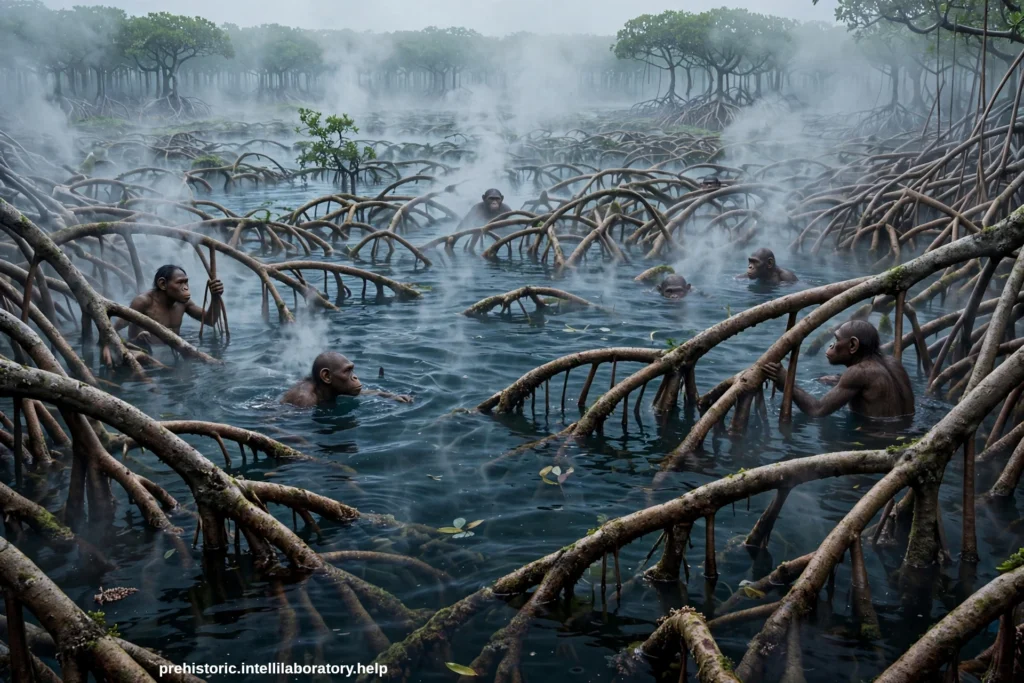
Australopithecine Environment During the Mid-Piacenzian
- Habitat: Primarily woodland and savanna-edge environments. They were adapted to open and semi-open landscapes but likely used wooded patches for resources and cover.
- Climate: While the global climate was warmer, the specific Rift Valley environments might have experienced seasonal variations or were in transition towards drier conditions. The warmth might have reduced the severity of seasons, but aridity could still have been a factor depending on the exact location.
- Vegetation: Likely had access to Acacia trees, grasses, sedges, and perhaps some fruit-bearing trees (like figs).
While the Mid-Piacenzian climate was warmer globally, the specific environments inhabited by early Australopithecus were likely in a transition phase, perhaps slightly warmer than the peak Pleistocene but potentially becoming drier. Their success was due to robust skeletal features, dietary flexibility, bipedalism, and social behavior, not tool use, which came later. The intense weather events described would have been part of their daily lives, influencing their movements and resource gathering strategies. Understanding their adaptation during this period helps bridge the gap between earlier apes and the genus Homo.
This analysis provides a comprehensive picture based on geological and paleontological principles, though detailed specifics about Australopithecine daily life during the MPWP remain speculative due to the fragmentary nature of the fossil record. The warmth and moisture of the MPWP likely supported lush, productive environments, but the long-term trend was towards the dramatic cooling and drying of the Pleistocene.
Setting the Stage: A Warmer World
The Mid-Piacenzian Warm Period (MPWP) is considered one of the most significant global warm periods of the past 34 million years. Global mean temperatures were considerably higher than today, likely by several degrees Celsius. Sea levels were much higher, perhaps 20-40 meters above current levels, due to less ice locked up in the polar regions. This warmer climate profoundly influenced atmospheric circulation patterns, including those responsible for arid conditions.
The Deserts of the Mid-Piacenzian
Despite the generally warmer and wetter conditions in many parts of the world (especially higher latitudes), the dominant climate engine that creates deserts – the subtropical high-pressure belt (often associated with the Intertropical Convergence Zone (ITCZ) moving seasonally, and the Hadley Cell – still operated effectively in many areas. The key difference was likely a slightly stronger or more persistent intensification of these arid zones due to the warmer, moister global atmosphere potentially carrying more rain away from the subtropics, leaving the core desert regions even drier relative to the surrounding wetter areas, or perhaps simply warmer.
Climate and Temperature
- General Temperatures: Deserts during the MPWP would have been significantly hotter than today’s average deserts. The global warmth meant baseline temperatures were higher.
- Maximum Temperatures: Specific peak temperatures are hard to pinpoint universally, but we can infer based on analogues and climate models.
- Intratropical Deserts (e.g., Sahara analogues): Temperatures could have reached well into the high 40s°C (113-120°F) or potentially even
the low 50s°F (around 130°F) in the hottest surface locations (low elevations, clear days, during peak summer monsoon break or dry season). These would be the equivalents of the hottest modern deserts like Death Valley (which currently reaches around 54°C/129°F) but potentially pushed to extremes by the warmer baseline. - Coastal Deserts (e.g., Atacama analogues): These are often influenced by cold ocean currents, providing a natural cooling effect. While still extremely hot, their maximum temperatures might have been slightly lower than the truly continental deserts, perhaps peaking in the high 30s/40s°C (high 100s/113s°F), but still significantly warmer than their modern counterparts.
- Intertropical Desert Bands: A continuous band of desert conditions likely existed between the two monsoon belts (roughly 15-25°N and 15-25°S). Temperatures here would depend on latitude and season, but would have been extremely high, potentially similar to or exceeding the continental deserts.
- Intratropical Deserts (e.g., Sahara analogues): Temperatures could have reached well into the high 40s°C (113-120°F) or potentially even
- Key Climate Features:
- Subtropical High-Pressure Belts: Strong, persistent subsidence (sinking air) creating clear skies, calm winds, and very low precipitation.
- Intensified Land-Sea Breezes: Warmer land surfaces would have created very strong daily temperature contrasts, leading to potentially more energetic sea breezes at night, but extremely weak or variable winds during the day.
- Seasonal Monsoons: Monsoonal influences were likely stronger and perhaps more variable due to the warmer climate. This meant periods of intense heat and drought alternating with potentially brief but heavy rainfall events during the wet season, followed by long dry seasons.
- Reduced Seasonal Temperature Variation: While still diurnal extremes (hot days, cool nights) were pronounced, the difference between the hottest month and coolest month might have been slightly less than in many modern deserts due to the warmer baseline, though still significant.
- Maximum Temperatures: Specific peak temperatures are hard to pinpoint universally, but we can infer based on analogues and climate models.
Wind
- General Wind Patterns: Like today, deserts would have been dominated by large-scale atmospheric circulation (the Hadley Cell – rising air near the equator, sinking air at around 30° latitude). This generally brings calm, dry air from the subtropical high-pressure zones into desert interiors.
- Surface Winds: Surface winds were likely weaker than today due to the warmer, moister baseline atmosphere potentially reducing the pressure gradient aloft. However, local winds could still be significant:
- Land Breezes: Strong nocturnal downslope flows from mountains into basins, exacerbating the already extreme lowlands.
- Katabatic Winds: Cold, dense air flowing down mountain slopes, but potentially moderated by the warmer ambient temperature.
- Storm-Track Winds: During active monsoon or storm seasons, strong winds could bring sand and dust storms, especially in areas with less vegetation cover. These dust storms might have been more frequent or intense due to drier soils and higher atmospheric moisture potentially lifting dust more effectively.
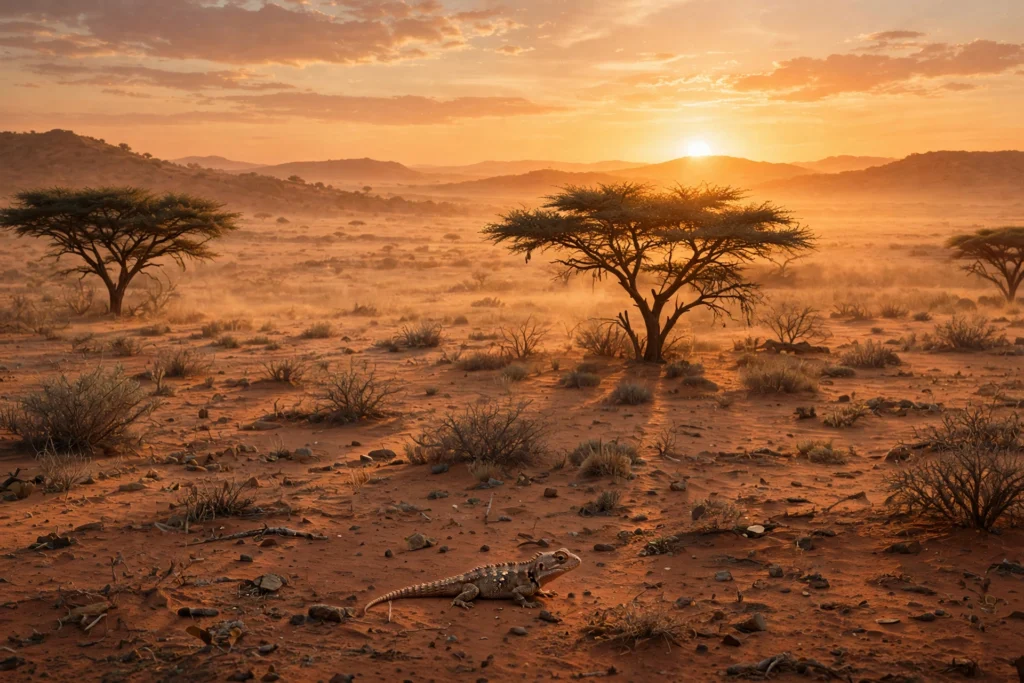
Life in the Mid-Piacenzian Deserts
Despite the extreme heat and aridity, life existed, though likely with lower diversity and different compositions than today.
- Flora:
- Dominant Plants: Gymnosperms (conifers, cycads) and drought-adapted angiosperms (grasses, succulents, cacti analogues) would have been key. Pollen records suggest subtropical vegetation dominated many areas, with adaptations like deep root systems, small leaves, or water-storing tissues.
- Vegetation Structure: Much of the desert vegetation would have been more shrub-dominated or sparse grassland than the vast expanses of modern iconic desert plants (like the North American Chaco or Sonoran desert flora). There might have been areas of gallery forest along ephemeral waterways.
- Less “Modern Desert Feel”: The dominant feeling might have been more like a “subtropical desert” or “warm desert” – think of modern places like the Chihuahuan Desert or parts of Australia, but potentially with slightly higher baseline temperatures and slightly lower average precipitation.
- Fauna:
- Lower Diversity: Biodiversity would have been lower than in today’s temperate or tropical zones, but potentially higher than the most extreme modern deserts. Many modern desert specialists likely hadn’t evolved yet, or were different.
- Adaptations: Life was highly specialized for aridity and heat.
- Reptiles: Snakes, lizards, and turtles were dominant predators and scavengers. Many would be nocturnal or fossorial (living underground) to
avoid the heat. Examples might include large monitor lizards or early turtle relatives. - Arachnids: Scorpions, spiders (like tarantulas), and solifuges (sun spiders) would be abundant, taking advantage of the heat and hunting at night or in burrows.
- Mammals: Small mammals, rodents, and perhaps some larger, more armoured herbivores (like early horses, rhinos, or tapirs) with efficient kidneys and burrowing behaviours. Probabilities of large, cursorial (running) predators like modern Felis species might be lower; scavenging might be more prevalent. Crocodiles and turtles inhabited oases or larger, albeit ephemeral, water bodies.
- Insects and Invertebrates: Extremely diverse, including specialized beetles, ants, and insects adapted to extract moisture from plants, dung, or humid microhabitats. Many would be nocturnal.
- Birds: Birds would likely be less diverse and more reliant on finding water, perhaps favouring areas near oases or migrating through during wetter periods. Nocturnal hunters would be common.
- Reptiles: Snakes, lizards, and turtles were dominant predators and scavengers. Many would be nocturnal or fossorial (living underground) to
- Hydrology: Water was scarce, but vital. Streams (often dry for long periods), ephemeral lakes, and shallow groundwater were crucial. Life would be concentrated around these resources, leading to interesting ecological interactions. Groundwater recharge might have been slower due to higher evaporation rates.
A World of Extreme Heat and Adaptation
The deserts of the Mid-Piacenzian Warm Period were landscapes of intense solar radiation, extreme heat, and profound aridity. While benefiting from warmer global temperatures, they were still formidable environments shaped by powerful atmospheric circulation patterns. Life existed there, driven by adaptations to the heat and drought, but with much lower biodiversity than many ecosystems we see today. These ancient deserts were likely even hotter than the most extreme modern deserts we know, reflecting the significantly warmer climate of the period.
The MPWP was an extreme climate event that dramatically reshaped the Earth and set the stage for many evolutionary developments, including the rise of early hominins. While the ‘naked’ skin adaptation remains debated, the immense heat underscores its potential role.
What are your thoughts? Did early hominins lose their hair primarily for cooling in a warmer world? What other animals might have shown similar adaptations? Share your theories below! 👇