Okay, let’s break down the existence, locations, and fascinating facts about the Inuit, Aleut, Athabascan, and Algonquian groups.
It’s important to remember that these are modern group designations for languages and cultural spheres. Many groups fall under these classifications, and “tribes” is a simplification for purposes like this. Furthermore, these groups are still present today, though their traditional ways of life have changed significantly.
Here’s an analysis and summary:
1. Inuit (Eskimo)
- Era of Existence: Thousands of years. The distinct Inuit culture, as we typically understand it (with shared language, art, social structures, and
adaptation to the Arctic), likely became well-established around the end of the last Ice Age (about 10,000-12,000 years ago) and has persisted continuously
since then, adapting over time. Oral traditions suggest a presence in the Arctic for far longer. - Exact Location: Primarily the Eastern Arctic of Canada (Nunavut, Northwest Territories, Yukon) and Greenland. Historically, their range
extended further south along the Hudson Bay and James Bay coasts, but they are now firmly established in the Canadian Arctic Archipelago and Greenland. - Amazing Facts:
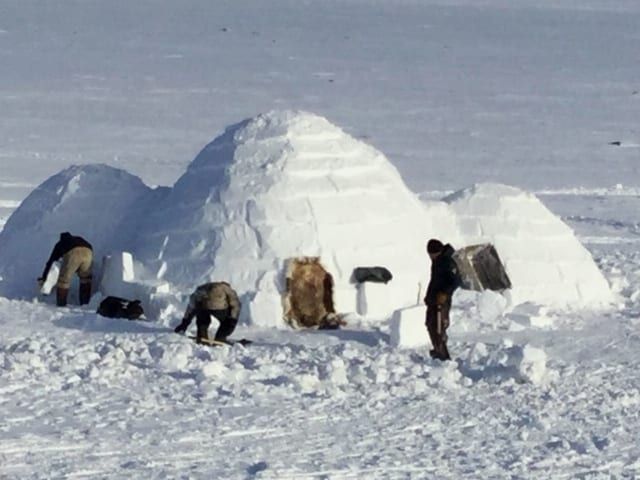
- Master Arctic Adaptation: They developed highly specialized technologies for survival in one of the harshest environments on Earth – igloos,
kayaks, specialized clothing (parksuk, mittens), dog sleds. - Vast Sea Hunters: Their diet historically relied heavily on marine mammals like seals (hunted using harpoons, darts, and spears from kayaks) and
Arctic char. - Distinctive Culture: Known for intricate ivory and stone carvings (inukshuk, masks), throat singing, and a rich oral tradition including legends
like that of the great white bear (polar bear). - Shared Language Sphere: While having dialects, they speak Inuktitut or Inuvialuktun, languages within the larger Eskimo-Aleut family. “Inuit” is an
umbrella term often used by outsiders; many groups prefer their specific ethnonym (e.g., Inuk, Inuitiq, Inuvialuk). - Resilience: They have maintained their distinct identity and culture despite significant contact, climate change, and modernization.
- Master Arctic Adaptation: They developed highly specialized technologies for survival in one of the harshest environments on Earth – igloos,
2. Aleut (Unangan)
- Era of Existence: Thousands of years. Oral traditions and archaeological evidence suggest a presence in the Aleutian Islands for millennia, with the
distinct Aleut language and culture emerging by the time of first Russian contact (mid-18th century). - Exact Location: The Aleutian Islands chain, stretching from the Alaska Peninsula to Attu Island, and historically also included parts of the Alaska
Peninsula mainland and possibly the Pribilof Islands (St. Paul and St. George). They are distinct from the Inuit, living further south and east. - Amazing Facts:
- Expert Navigators & Seafarers: They built exceptional sea-going skin-covered boats called umiaks, used for hunting sea mammals (harbor seal,
Steller sea lion, whales) and navigating the stormy North Pacific. - Resourceful Islanders: Their diet depended heavily on marine resources (sea mammals, fish) and, to a lesser extent, local plants and seabirds.
- Distinctive Culture: Known for intricate geometric carving styles (especially masks and house posts), unique weaving (using grasses and sometimes
feathers), and a complex mythology involving spirits and shapeshifters. - Vulnerable: Their population was drastically reduced in the 18th and 19th centuries due to Russian enslavement, Aleutian Island raids by Alaska
Native groups, and diseases introduced by Europeans. Today, the Unangan people are actively working to revitalize their language and culture. - Linguistic Cousins: They speak Aleut, a language closely related to Inuktitut, but distinct and part of the larger Eskimo-Aleut family.
- Expert Navigators & Seafarers: They built exceptional sea-going skin-covered boats called umiaks, used for hunting sea mammals (harbor seal,
3. Athabascan
- Era of Existence: Thousands of years. The Athabascan language is very old, appearing in North America around 5,000 years ago. However, the distinct
grouping and spread we associate with them likely solidified over the last couple of thousand years, beginning in Alaska and expanding southward. - Exact Location: Historically, the Athabascan-speaking area is vast. It starts in Alaska (Yukon River Delta, Interior, Alaska Peninsula) and extends
southward through Canada’s Northwest Territories, into British Columbia, Washington State, Idaho, Utah, Arizona, and down into
Mexico (Chihuahua, Sonora, Durango). This makes them one of the most geographically widespread Native American language groups. - Amazing Facts:
- Linguistic Widespread: Speakers of related languages (Athabascan family includes Navajo and Apache, alongside Tanana, Sekani, etc.) live across a
huge swathe of North America, from Alaska to Mexico. - Diverse Adaptations: While many are associated with hunting (bison, caribou, moose), their adaptations vary widely. Some groups historically lived
in more temperate forest environments, while others remained in the Arctic or even in the Sonoran Desert (Tohono O’odham). - Cultural Resilience: Many Athabascan groups maintained their languages and traditions despite colonization, forced assimilation, and displacement.
Today, there’s a strong movement for language revitalization and cultural preservation. - Shared Language Roots: The Athabascan languages are thought to have originated in Alaska and then spread southward, leading to the wide
geographical distribution and linguistic diversity within the family.
- Linguistic Widespread: Speakers of related languages (Athabascan family includes Navajo and Apache, alongside Tanana, Sekani, etc.) live across a
4. Algonquian
- Era of Existance: Thousands of years. The Algonquian language family appeared in North America around 5,000 years ago. The spread and establishment of
distinct Algonquian-speaking groups likely occurred over the subsequent millennia. - Exact Location: Historically, the Algonquian cultural sphere is vast and covers much of eastern and southeastern North America. This includes parts
of Canada (Labrador, Quebec, Ontario) and the eastern and midwestern United States (New England, New York, Ohio Valley, Great Lakes). They are the most
widespread Algonquian family group in terms of sheer numbers of speakers. - Amazing Facts:
- Vast Geographical Spread: They occupied a huge area, stretching from the Arctic (Labrador) to the Gulf of Mexico (Coosa River in Alabama) and from
the Atlantic coast to the Mississippi River and beyond in some areas. - Extensive Linguistic Network: The Algonquian language family is one of the largest in North America (by number of speakers) and includes many
well-known languages (e.g., Ojibwe, Cree, Menominee, Potawatomi, Shawnee, Miami, Kickapoo, Odawa, Odawa/Woodland Cree, Odawa/Woodland Ojibwe). - Shared Cultural Features: While diverse, many Algonquian groups shared similar environmental adaptations (depending on deer, fish, woodland
resources), social structures (potlatch ceremonies, clan systems), and artistic traditions (birchbark biting, beadwork, basketry). - Significant Influence: Their languages form the basis for many place names across eastern North America (e.g., Massachusetts, Connecticut,
Michigan, Wisconsin, Illinois, Chicago, Ottawa, Detroit, Peoria).
- Vast Geographical Spread: They occupied a huge area, stretching from the Arctic (Labrador) to the Gulf of Mexico (Coosa River in Alabama) and from
Summary:
- Timeframe: All these groups (Inuit, Aleut, Athabascan, Algonquian) existed thousands of years ago and are still present today. Their distinct cultures
and languages likely reached their current recognizable forms within the last few thousand years. - Location:
- Inuit/Aleut: Arctic/North Pacific coastal regions (Canada Arctic, Greenland, Aleutian Islands).
- Athabascan: Extremely widespread, from Alaska to Mexico, across Canada and the US.
- Algonquian: Extensive eastern and southeastern North America, from Labrador to the Gulf Coast and from the Atlantic to the Mississippi.
- Key Characteristics: Each group developed unique adaptations to their specific environments (Arctic, coastal, forested, desert), resulting in diverse
cultures, languages, and technologies, yet they all represent ancient, resilient, and influential peoples of North America.