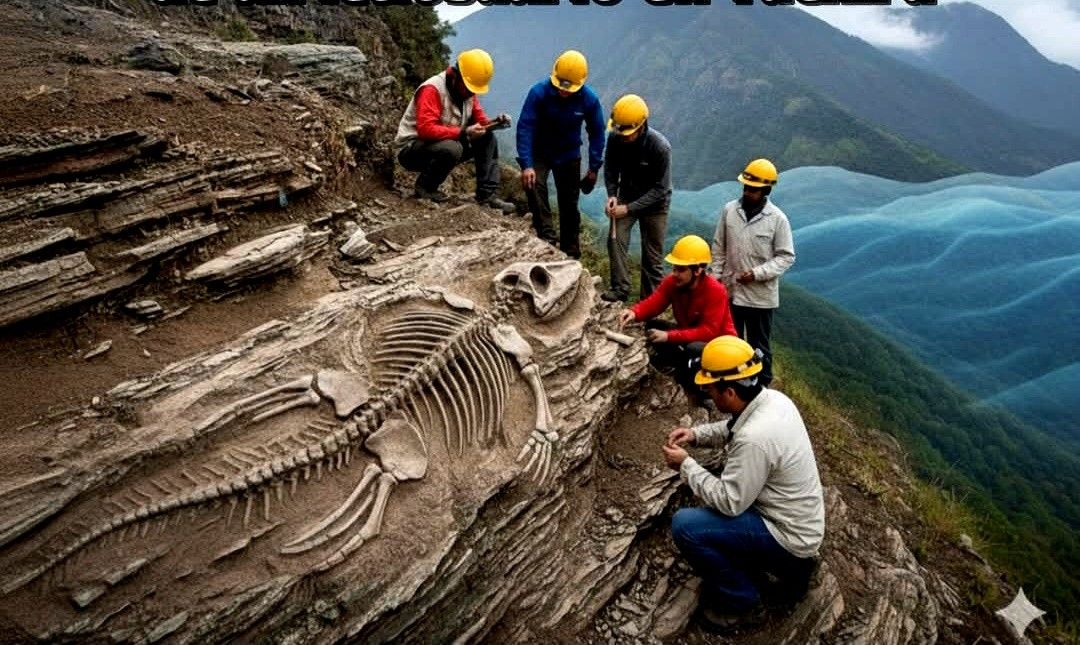
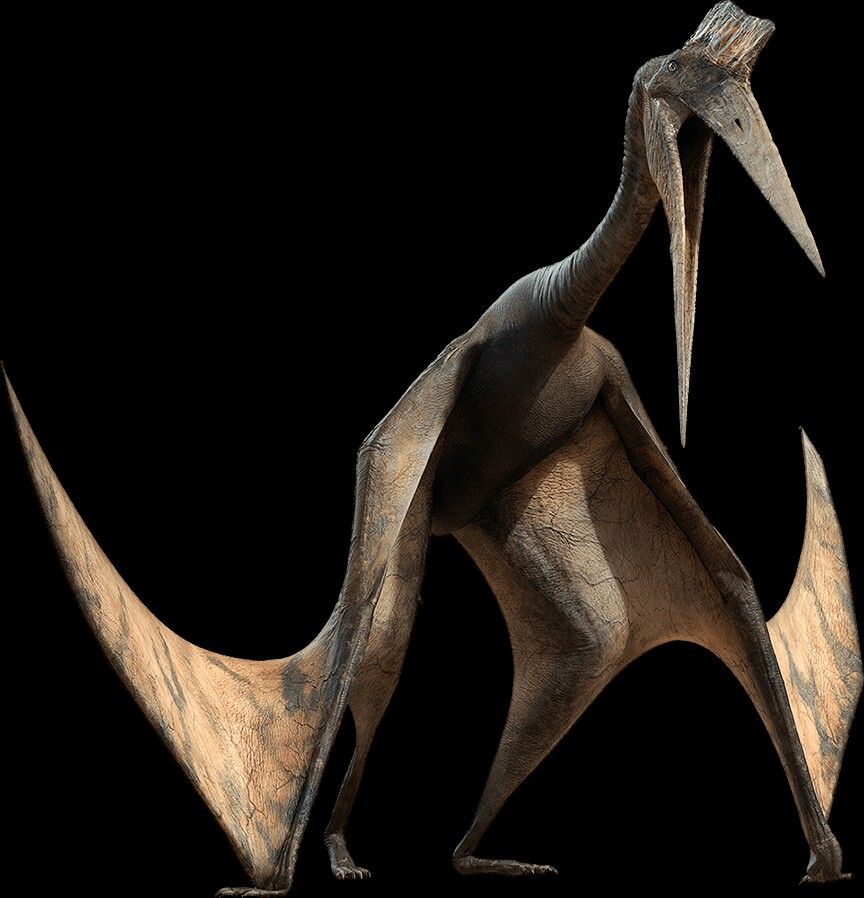
According to the research team, this fossil represents not only Egypt’s first confirmed pterosaur record but also an important step toward understanding the ancient skies of Africa during the age of dinosaurs. Scientists from the Mansoura University Vertebrate Paleontology Center recently discovered a significant finding in Egypt’s prehistoric record: the first confirmed pterosaur fossil ever found within the country. This discovery was made in the Bahariya Oasis, located in Egypt’s Western Desert, and is estimated to be more than 95 million years old. It dates back to the Early Cenomanian stage of the Cretaceous Period.
The fossilized wing bone indicates a medium-sized pterosaur with a wingspan of approximately four meters. Based on this specimen, researchers believe that the animal likely soared over rivers, floodplains, and coastal environments that once covered northern Egypt. The discovery was led by Egyptian scientists from Mansoura University in collaboration with international experts from the Denver Museum of Nature & Science and the Carnegie Museum of Natural History.
The fossil was initially discovered during a field expedition in 2018 and is currently undergoing further study. It belongs to the Ornithocheiromorpha group, which comprises pterosaurs known for their strong flying abilities and widespread distribution across the ancient Afro-Arabian region. This finding provides valuable insights into the diversity of flying reptiles in North Africa during that era. Additionally, it helps complete the picture of the Bahariya ecosystem, an area already renowned for hosting famous ancient creatures such as the giant predator Spinosaurus and the massive sauropod Paralititan.
The discovery is significant because Egypt’s pterosaur record was previously missing, despite numerous findings related to dinosaurs in the region. This newly discovered specimen represents an important step towards understanding the ancient skies of Africa during the age of dinosaurs and further enriches our knowledge of prehistoric life in this part of the world.